


Rebuilding a Porsche Clutch Cable Bracket with 3D Scanning
Some projects start with a drawing.
This one started with a broken part that had already lived a hard life.
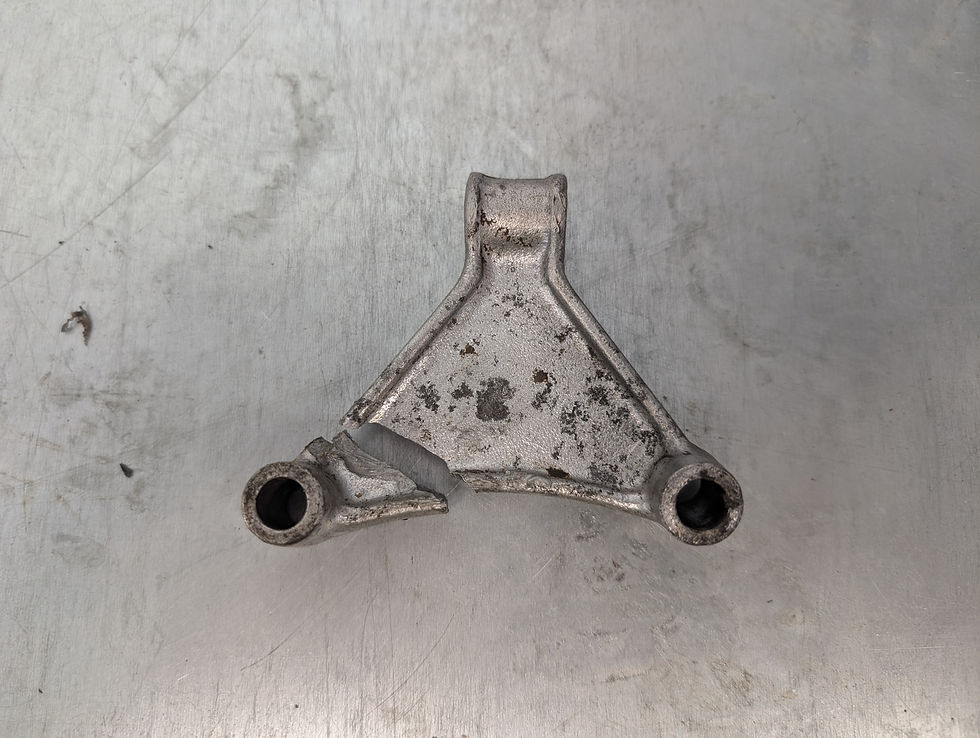
The component was a Porsche clutch cable bracket. It seems like parts like this fail at the worst possible moments, a nice drive through the country and suddenly you have no clutch and you are stuck in fourth gear. Years of fatigue had caused the original cast aluminum bracket to snap at one of its mounting points. The part was later welded back together to keep the car operational, but it was no longer something you could trust long term.
Replacement parts are hard to find and often the replacement part is used and in no better shape than the original. So, rather than hunting for a replacement or guessing dimensions, the decision was made to rebuild the part properly using 3D scanning and reverse engineering.
The Challenge: Fatigue, Fracture, and Lost Geometry
The clutch cable bracket may look simple, but it plays a critical role in maintaining alignment and load transfer within the clutch system. When it fails, the entire system is compromised.
In this case, the challenges stacked up quickly:
The original cast aluminum part had failed due to long-term fatigue
A welded repair altered local geometry
Critical reference features were distorted or partially lost
The goal wasn’t to copy the damage. It was to recreate a replacement bracket that matched the original design intent and could be manufactured reliably using CNC machining.
Scanning the Repaired Part
Even though the bracket had been welded, it still held valuable geometric information. The intact mounting bosses, wall transitions, and overall proportions provided the foundation for reconstruction.
The part was scanned using the new Creaform’s HandySCAN PRO system inside Creaform.OS, capturing high-resolution surface data of the entire component. This produced a detailed mesh representing the bracket exactly as it existed after repair.

From Scan to CAD: Rebuilding Design Intent
With the scan complete, James took over the reverse engineering process using the Creaform Metrology Suite, Scan-to-CAD Pro module.
This step went beyond surface fitting. The model was rebuilt by identifying critical features, extracting key dimensions, and restoring symmetry and geometry where welding and fatigue had distorted the original shape.
The CAD model reflects how the bracket was intended to function, not how it failed. Mounting holes, fillets, and load-bearing transitions were carefully reconstructed to support CNC machining and long-term durability.


Verifying the Model: CAD-to-Scan Comparison
To ensure accuracy, the final CAD model was compared directly against the original scan data. A color map comparison highlights areas where the model aligns tightly with the scan, while clearly identifying regions that were intentionally redesigned.
This verification step confirms that critical interfaces and mounting geometry remain faithful to the original part, while damaged or unreliable features are corrected.

The Outcome: A Manufacturable Digital Replacement
The final deliverable was a clean, fully defined CAD model ready for CNC machining. What started as a fatigued, welded cast part is now a reusable digital asset that can support:
Manufacturing of a replacement bracket
Future revisions or improvements
Long-term serviceability without guesswork
By designing the replacement with machining in mind, the new bracket can move beyond the limitations of the original casting.
Final Thoughts
This project is a good reminder that reverse engineering isn’t about copying damage. It’s about understanding and implementing design intent.
By combining 3D scanning with thoughtful CAD reconstruction, we turned a failed Porsche clutch cable bracket into a reliable, manufacturable replacement. No assumptions left unchecked.
And in the end, that work shows up in the most tangible way possible: the car is back on the road, supported by a part designed to last.

Have a Similar Project?
Whether you’re dealing with hand-built prototypes, legacy components, or parts that have failed over time, Rapid3D can help. Whether you want to buy the 3d scanner and software and perform this workflow yourself or you want to work with our team we can help you capture existing geometry, restore design intent, and cover physical parts into production-ready CAD.
Get in touch with our team to discuss your 3D scanning or reverse engineering requirements.


Comments